Monday, March 14, 2011

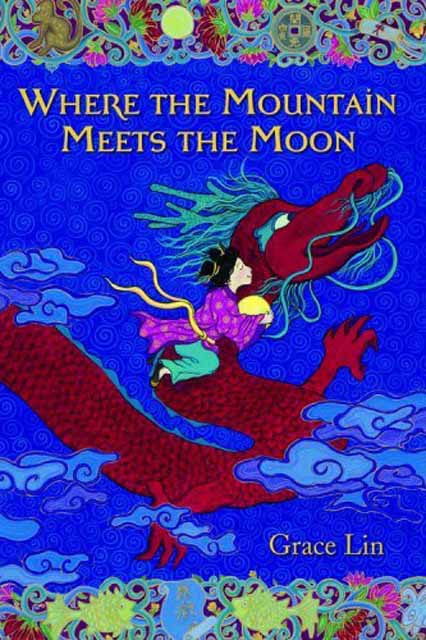
Win A Copy Of Grace Lin's "Where The Mountain Meets The Moon"

March is National Reading Month. ChinaSprout is celebrating by giving you free shipping on all book purchases through March 20th. We are also giving away a copy of Grace Lin's book, "Where The Mountain Meets The Moon."

Grace is one of my favorite authors for young children. Her simple and colorful illustrations remind me of Chinese folk paintings. Plus, her stories really capture what it is like to grow up Asian in a Western country. ChinaSprout was fortunate enough to work with Grace on our "One Year In Beijing" book. Her beautiful illustrations take me back to many of my own experiences growing up in Beijing -- the excitement of Lantern Festival, visiting Yellow Mountain, eating delicious candied haws, families gathering for the holidays and studying very hard in school.

There are three ways that you can enter to win the "Where The Mountain Meets The Moon" book:
  1. Post your favorite Grace Lin book title below in the response section of this blog;
  2. Post your favorite Grace Lin book title on our Facebook Page; and
  3. Post your favorite Grace Lin book title on Twitter (you must include @ChinaSprout in your post).
You can enter up to three times -- one entry for each platform (our blog, our Facebook Page and via Twitter). Entries will be accepted starting at midnight, March 14 and the deadline for entry is midnight, March 21, 2011. The entries will be catalogued by entry date and time, and the winner will be chosen via a random number generator software program. The winner will be chosen within 2 days of the entry date deadline. The winner must respond within 5 days of receiving notice, or the entry will be forfeited, and another winner will be selected. You must live in the United States or Canada and be 18+ to enter. Read the Official Giveaway Rules for further guidelines.

Good luck, and happy reading!


Share/Save/Bookmark

Monday, March 07, 2011

The Challenges of Race in Transracial Adoption


Photo by grapesmc
Adoptive parents in trans-racial families have additional challenges to parenting biological children. In addition to the usual childhood struggles, we must find ways to support and guide our children through issues involving not only adoption, but race, as well. Helping my children to identify themselves as Chinese was something that I believed I was doing pretty well.

We discuss our children's heritage and culture regularly. It is a deeply ingrained part of our lives. We are active members of Families With Children From China. We attend Jane Brown lectures and playshops. We have watched and discussed "Adopted the Movie" together numerous times. And, over the years, we have engaged in any number of activities and conversations in an effort to promote racial awareness within our girls.

Imagine my surprise when my precocious 8 year old asked me how our neighbors knew that she was Chinese after they dropped off some Chinese New Year decorations that they had purchased in Singapore. Confused, I pursued this question with her a little more, and come to find out, she visually identifies herself with her Caucasian brunette friend. My personal lesson here is that no matter how well-adjusted you think your kids are, think again.

Living in Los Angeles, our friends came from extremely diverse backgrounds and the girls' school could be called 'a little United Nations.' Since moving to the Midwest, and more specifically the suburban Midwest, that diversity is harder to come by. While our youngest daughter is Chinese, and her best friend is African American, she is evidently still self-identifying as white.

No matter how much we love our kids, and no matter how hard we try to introduce them to their culture, the reality is that my husband and I are white, and that cultural color rubs off on our girls. In fact, it is undeniably their primary make-up. We often laugh together about nature vs. nurture moments with our girls. However, those nurture traits are what point up the difference between being raised white and being raised Chinese. There is nothing that I can do to give my transracially adopted children the direct experience of being raised Chinese. It is an ability unique to Chinese parents.

Jana Wolff wrote a thoughtful piece on this subject for Adoptive Families magazine entitled 'Raising a Child of Another Race." In the article, she highlights a number of responsibilities that adoptive parents of different-race children must take in raising their children including:

o interacting with people of your child's race
o living in multicultural neighborhoods
o finding same race mentors and role models for your child
o advocating for unbiased learning materials
o confronting racism openly
o cooking and eating ethnic dishes
o providing special maintenance to hair and skin
o celebrating all cultures
o taking part in homeland tours and culture camps
o creating a positive cultural environment at home

I've been eyeing Outsiders Within and the Pieces of Me workbook for the girls, and now they take special priority.

I'm also starting to search for blogs by adult adoptees that will help me to better understand this struggle. So far, two stand-outs include:
  • My Mind on Paper - This blog is written by Kevin Hofmann, an African American man adopted by white parents in the 1960s. He now lectures on the subject of transracial adoption. His posts are thoughtful and insightful. As evidenced by his most recent post where he recalls a childhood relationship, his learning on the subject is on-going.
  • Ethnically Incorrect Daughter - Blogger Sumeia Williams offers sometimes heartbreaking stories on her struggles to self-identify, a theme which is not uncommon in transracial adoption circles.

Do you believe that race or cultural identification is important? If so, what are you doing to help your children learn about their cultural heritage and ultimately embrace who they are?


Share/Save/Bookmark

Thursday, February 03, 2011

Congratulations! You Won ChinaSprout's Red Envelope Sweepstakes!

Thanks to everyone who entered the ChinaSprout Red Envelope Sweepstakes. We used a random drawing to determine the winner. We are pleased to announce that Alfredia Bowers of Georgia was the winning entry. Congratulations, Alfredia, and Happy New Year!


Xiaoning


Share/Save/Bookmark

Tuesday, February 01, 2011

How to Make an Origami Rabbit

We're experiencing yet another winter storm, and the kids are home from school today. This has me searching for things to keep them busy.  With the Year of the Rabbit only two days away, I went looking for projects related to Chinese New Year and found some fun rabbit origami projects.  Who knew that there are so many different ways to make origami rabbits?  The projects range from easy to difficult and are great for sharing in a classroom or at a Chinese New Year party (or, in our case, for doing when you're snowbound).

If your children find themselves enjoying creating origami rabbits and are looking for more projects, ChinaSprout carries a great selection of origami paper and kits as well as  origami books for all ages.

Have fun watching these fun origami videos. And, if you create any of them yourself, please be sure to share pictures! We would love to see your Year of the Rabbit bunnies!

Easy Origami Bunny Face


Make an Origami Rabbit


How to Make an Origami Inflatable Bunny


How to Make an Origami Jumping Rabbit


Share/Save/Bookmark

Monday, January 31, 2011

Chinese New Year Crafts For Kids

Using crafts is always a fun way to engage kids in learning about Chinese New Year. While their hands are busy creating brightly-colored paper confections, you can tell them about the story of Nian, the Kitchen God, or why dumplings and noodles are a favorite food served at Chinese New Year dinners.

There are many great crafts for Chinese New Year, and ChinaSprout is pleased to carry a number of really great craft books for the holiday.

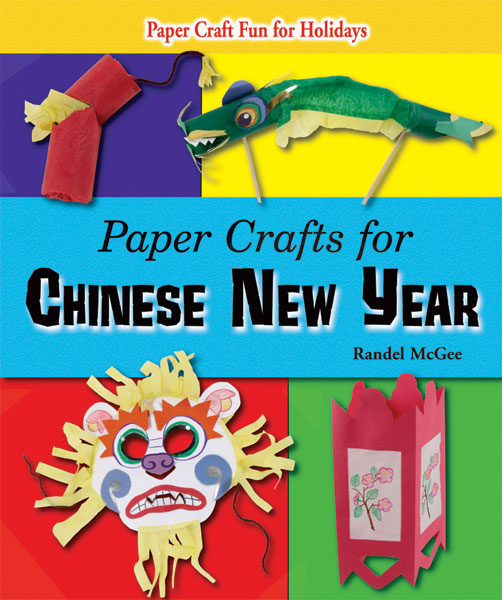
Paper Crafts for Chinese New Year - Written by puppeteer and storyteller, Randel McGee, this children's craft book mixes information about the history and traditions of the holiday with eight related crafts. Enlargeable patterns make individualizing the projects easy. Chinese New Year craft projects include dragon puppets, red envelopes, shadow puppets, Chinese lanterns, firecrackers, and more. This book is perfect for children 6 and up, but can be used for younger children if they have adult support with cutting.

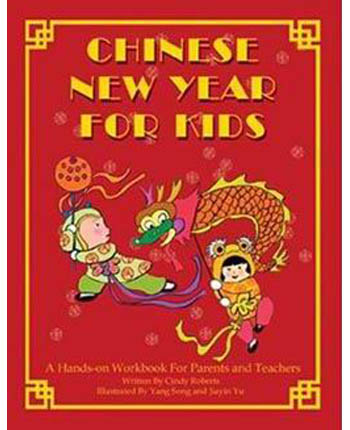
Chinese New Year for Kids - This workbook for both parents and teachers can be used at home or in the classroom. Published by ChinaSprout, the 30-page, full color book is practically a child's handbook for the holiday. Explanations of Chinese New Year, the Chinese New Year calendar, the importance of ancestors in China, as well as ways the Chinese celebrate the holiday are accompanied by hands-on crafts, games and activities. Children will learn to make dragon puppets, red envelopes and paper lanterns. They will also participate in a lion dance and dragon parade.  Pair this with ChinaSprout's Chinese New Year Packets, and you have everything you need to share the holiday with a classroom or create a Chinese New Year party.

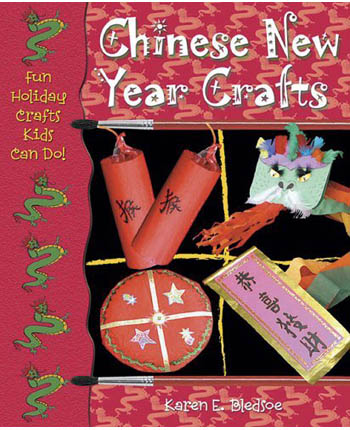
Chinese New Year Crafts - The combination of detailed instructions on the left pages with step-by-step photographs on the right create an easy-to-follow format.  This 32-page book features 10 crafts including a dragon streamer puppet, a ribbon lantern, Chinese zodiac pictures, and more. The introduction includes some brief information about the holiday.  Chinese New Year Crafts is a geared toward kindergarten through fifth grade students, though it will be more appealing to younger children.


Share/Save/Bookmark

Friday, January 28, 2011

Favorite Chinese New Year Books for Kids

The Chinese New Year is quickly approaching on February 3. This year, we say goodbye to the Year of the Tiger, and welcome the Year of the Rabbit. Chinese New Year is the perfect time to introduce children to Chinese culture. Although a good percentage of the world celebrates the holiday, it is a uniquely exciting celebration to many kids.

Whether you are sharing the holiday with a classroom or at home, there are many great ways to present Chinese New Year for kids. Even if you don't know a lot about the holiday, there are many resources available that you can use either to learn about Chinese New Year or as a teaching resource. Books are a great tool because they can be read together or independently. Following are some of ChinaSprout's best-selling Chinese New Year books:

Pre-School
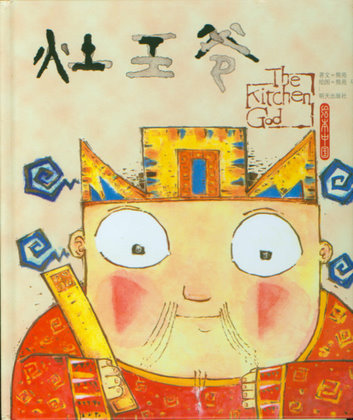
Kitchen GodKitchen God - According to Chinese legend, the Kitchen God watches over families throughout the year. Just before the New Year, he travels to heaven to report on the family's activities to the Jade Emperor. This beautifully illustrated picture book is full of fun and mischief. Children will relate as the story unfolds about a family and their misbehavior, which occurs under the watchful eye of the Kitchen God.

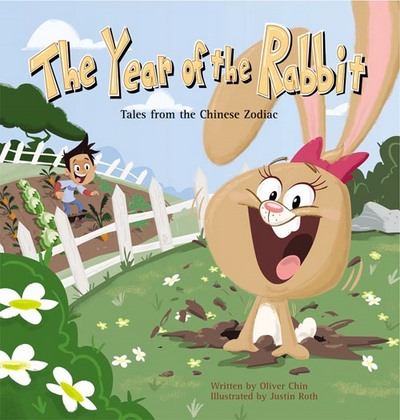
The Year of the Rabbit: Tales from the Chinese Zodiac - This is the sixth in a planned 12-book series that introduces children to the animals of the Chinese zodiac. Oliver Chin introduces young readers to the characteristics of each zodiac animal through lively stories accompanied by exuberant illustrations. The Year of the Rabbit follows the escapades of Rosie, a long-eared hare with a nose for adventure. Along the way, she meets the boy Jai and other animals from the Chinese lunar calendar. By story's end, Rosie discovers that her unique traits serve her well.

Elementary School
Celebrate Chinese New Year with Fireworks, Dragons and Lanterns - This vibrant and informative book is part of National Geographic's "Holidays Around the World" series. It is filled with concise, but informative details about many aspects of the Chinese holiday, including giving lucky red envelopes, the Chinese zodiac, the importance of the colors red and gold in the Chinese culture, the use of couplets, lion dancers, dragons, and more. Celebrate Chinese New Year also includes a section on crafts and recipes that ties the learning in with more hands-on fun.

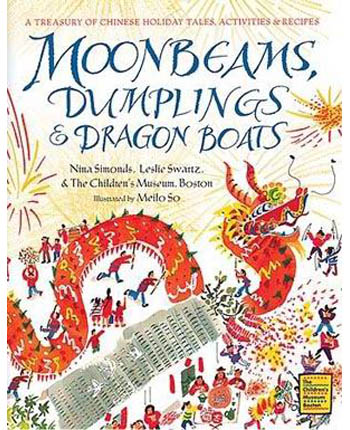
Moonbeams, Dumplings and Dragonboats - This is a long-time favorite book of teachers and families, alike. This beautifully illustrated book delves deep into the stories, celebrations and customs that surround many Chinese holidays including Chinese New Year, Dragon Boat Festival and Mid-Autumn Festival. Moonbeams is filled with recipes, activities and traditional tales that will engage readers young and old.

Middle School and Junior High
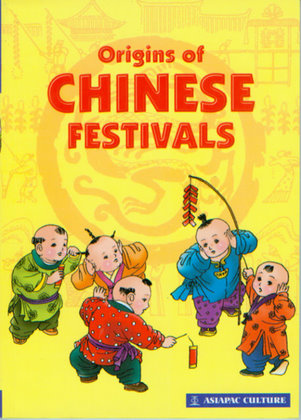
Origins of Chinese Festivals - The fabulous Origins series uses cartoon graphic stories to share history and culture with kids. This book explores all of the major Chinese holidays, including the customs and history behind them. There are 29 stories in all, which will have kids repeating facts that they didn't even realized that they learned because they were having so much fun reading comics.

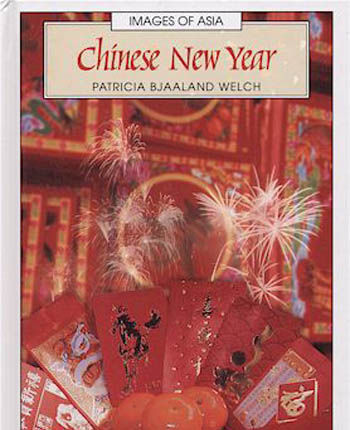
Chinese New Year - Patricia Bjaaland Welch takes readers on a journey that provides a complete introduction to celebrating the Chinese New Year. She shares insights into holiday origins, greetings, customs, food and more. After reading Chinese New Year, readers will come to understand the meaning behind the various flowers, fruits and symbols that are prominent during this most important Chinese holiday. They will also learn what to expect during the holiday and appropriate ways to interact with others, based on thousands of years of traditions and customs.


Share/Save/Bookmark

Wednesday, December 15, 2010

Using Rhythm and Tones In the Classroom and At Home

One of the things that we prioritized when creating our new Chinese language learning book and CD set, Rhythm and Tones, Inventive Chants and Songs for Learning Chinese, was the ability to use it both in the classroom and at home. In order for language learning to be successful, it is important that children get as much exposure to the language as possible. The songs used to teach words in Rhythm and Tones are catchy and easy to sing, which make it easy to incorporate Chinese language learning into every day life.

We created the book so that it could easily be used both as guided coursework in the classroom and at home for self-study. The textbook is straight-forward enough that parents, without any formal knowledge of Chinese, can use the book to teach their children Chinese words, phrases, numbers, and even basic principles of the written language. Chinese teachers can take the textbook's simplified format to the next level by challenging the students with games and questions that cause the students to think more deeply about what they are learning.

The book's colorful illustrations are designed to illuminate the meaning of the songs and chants. The pictures tell the story without interference from the native language. The book's authors, Pauline Huang and Robin Harvey have been developing the Rhythm and Tones coursework in their classrooms for years. Below are some of their suggestions for incorporating the text and CD in your own Chinese language learning efforts:
  • Study the pictures first. What do you think the song is about? Can you name the children? Try to describe the pictures. Lesson 4 will help you say “This is…” and “That is…”
  • Listen to the song or chant. Do you recognize any words? You might hear the names of children, or phrases from earlier songs. Begin to put together the meaning.
  • Read along. You will see that each character is one spoken syllable. (Sometimes two or more characters join to form a word.) Explore the beauty and logic of Chinese characters through radicals searches.
  • Play along! Small xylophones and percussion instruments enhance the rhythms and allow us to immerse ourselves in the music, forgetting that we are learning language.
  • Practice pronunciation naturally. Our chants emphasize the natural speech patterns and four tones of Chinese, which are introduced in chapter, The Four Tones Chant. Try Tones Yoga and move your body with the tones.
  • Play the language-based games we suggest. Try out different roles as you sing and chant. Act out the songs or chants. Play and learning are not mutually exclusive!
  • Take advantage of the karaoke versions on the CD and musical scores in the back of the book. Use the original lyrics, or make up your own!
What are some of your suggestions for using Rhythm and Tones to teach Chinese language?


Share/Save/Bookmark

Sunday, December 12, 2010

Rhythm and Tones Uses Music to Make Chinese Language Learning Fun

I spent the last few months working to produce a new ChinaSprout published book and music CD called Rhythm and Tones, Inventive Chants and Songs for Learning Chinese. I am very excited to share this set with our customers, because I believe that it fills an important need in Chinese language education -- making learning fun!

The number of students learning Chinese is on the rise. But, the complaint that I hear most from Western students, parents and even teachers is that the typical Chinese classroom environment is too rigid to keep students interested. That's why I jumped at the chance to work with Pauline Huang and Robin Harvey. These two talented teachers put their lessons to music, and brought fun back into the classroom.

"We love teaching Chinese with music and rhythm, and the children we teach love it, as well," Robin says. "When we sing, we are relaxed and receptive. Research shows that this is a key to language learning. Lyrics are naturally repetitive, another key, and they run through our heads while we go about our day. In fact, I still sing the song that my Latin teacher taught in 11th grade, "sum es est."

Before they met, they each used chants and songs to teach Chinese. Robin was inspired by Carolyn Graham's "Jazz Chants," and Pauline by her musical background. One day, Pauline wrote the song "I'm Hungry"(肚子饿了) for their classes. The two then worked together to focus the language for their students. After that, their collaborations continued.

In mid-November, we showcased Rhythm and Tones for teachers at the 2010 American Council on the Teaching of Foreign Language (ACTFL) conference. The positive response that we received was incredible! Everyone who walked past our booth would stop when they heard the chants and music. Most of the Chinese language teachers we spoke with bought the set. They loved it because of the rhythms, the simple, repetitive words and the fun music. Many teachers said that this was exactly the sort of teaching tool that they had been seeking for a long time.

Many of our ChinaSprout customers are looking for Chinese language tools that they can use to help their children at home. With this in mind, we created the Rhythm and Tones set so that it has a life outside of the classroom. Kids and parents can easily work together through the textbook to learn words, sentences and even radicals. Plus, the accompanying CD is filled with songs that families can listen to and sing along with while at home or in the car.

There are so many ways to use this set, both in the classroom and at home. I will share some suggestions and video in the next few days.


Share/Save/Bookmark

Monday, December 06, 2010

Scott Simon's "Baby, We Were Meant for Each Other" Celebrates Adoption

Baby, We Were Meant for Each Other is a celebration of adoption, written by broadcaster Scott Simon. The book provides an intimate and heartwarming look at Simon and his wife Caroline's adoption of two girls from China, whom they clearly love deeply.  Their struggles with infertility, their adoption journey and their daily challenges of raising two strong, independent young girls are all covered with the wink and a smile delivery that one comes to expect from listening to his NPR show, "Weekend Edition with Scott Simon."

For anyone who has adopted internationally, Simon's stories of his family's adoption trips to China will bring back memories.  The hotel room banter of nervous parents trying to win the affections of a child, who wants absolutely nothing to do with them, will not be unfamiliar.  The raw emotions that accompany this heart wrenching journey to family are practically universal.  The moments are fun to re-live with him again.  And, he tells of these moments in a way that does not mask the pain, but that makes us laugh at the absurdity of plying our children with warm baths and noodles.

Our goal is to show our children that we can provide for them, and that they can love us, because we truly love them. However, that trust has to be earned over long periods, often times again and again. The unique challenges that adoptive families face do not end when our children have reached a point of seeming calm.

In addition to sharing his personal insights and experiences, Simon seeks out others whose lives have been touched by adoption. In a world where the media loves to call out adoption status when associated with serial killers and psychosis, Simon introduces the reader to a host of well-adjusted and downright happy adoptees.  This is not to say that he makes light of the challenges or heartache that some of these individuals and families face. He chooses, instead, to focus on the positive, on the tenacity of the human spirit and of people's capacity for unconditional love.

In its whole, Baby, We Were Meant for Each Other is a love story. It is Simon's ode to his family, and it truly is a celebration of adoption. I struggled with this book and its "love conquers all" theme. At one point, when discussing the primal wound adoption theory, Simon says " I think that the love my wife and I give our daughters can help bind whatever wound they have and make them strong."

I've seen first hand when love isn't enough in adoption. I wish he would have given more credence to the reality that abandonment can hurt our children very deeply -- to a point where our love can't always fix it. However, as a friend recently pointed out to me, as adoptive parents, we often spend our time reading about "when things go wrong," so that we can avoid or amend these issues. Simon's book is a celebration of all that can be right with adoption. And if it leaves you with a warm heart and a smile, well, that's not such a bad thing.


Share/Save/Bookmark

Monday, December 14, 2009

O' Christmas Tree

I was helping BoBo with some homework earlier this week. She had to write about her holiday traditions and share them with her class. Admittedly, we struggled with this assignment because many of our family traditions have changed since we moved, and we are working to create new ones.

One thing that remains constant is our holiday ornament exchange. The girls create handmade keepsakes, and they each receive one special ornament to mark the year. They have their own small tree on which they hang these ornaments. Every year, we save these ornaments for last. When the box is finally given to them, the girls quickly spirit themselves away in their room where they will stay for hours giggling, unwrapping ornaments and hanging them on their little tree. I don't know what they talk about when they're in there, or what takes them so long to decorate such a small tree, but this time together is one that they anticipate every year.

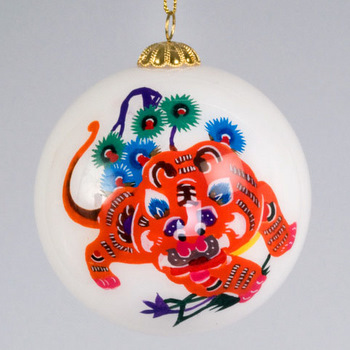
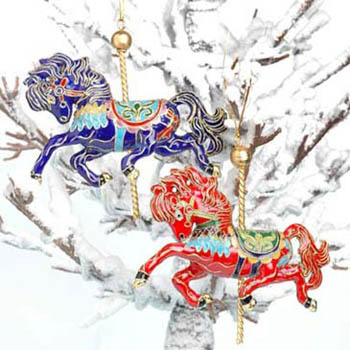
Most of their ornaments are China focused, which isn't exactly a conscious choice, but instead evolved from their annual review of the ChinaSprout catalog. This year, WeiWei asked for the hand-painted tiger papercut ornament. Being a tiger herself, she is very excited for the coming year and is obsessed with everything tiger. BoBo is getting a cloisonne horse. It's one that she has admired for awhile, and this year, it seemed appropriate as a reminder to her to slow down and just enjoy the ride.

While BoBo and I researched to see if our tradition is unique, we found other families who share this tradition as well. One of our favorite displays was Malinda's family tree at AdoptionTalk. We also ran across some beautiful Chinese ornaments at Tania McCartney's site. Her dazzling array of ornaments was enough to cover seven trees in their Beijing home.

The girls' holiday ornaments have become a way for us to blend two cultures. While it may be only a small gesture, it is one that has a great deal of importance to them. And, because they relish their time together huddled around their tiny tree, I know that someday they will also enjoy that excitement with their own family as they open the special box and pull out the ornaments, each with a special story to share.


Share/Save/Bookmark

Thursday, October 01, 2009

Parade and Gala for the 60th Anniversary Celebration

I went to a friend's house and watched the parade on the CCTV Live last night. While it was very impressive, I didn't feel it was as spectacular as I expected. Some sections seemed too long. You may watch it online too.

Instead, the gala and firework were much more spectacular. Directed by Zhang Yimou, the gala lasted for three hours and it had over 60,000 performers, most of whom are not professional singers and dancers. The 9,000 sq. m (90,000 sq. ft.) screen was the centerpiece of the performance. The screen changed over 800 times, all of which was done by 4,028 soldiers holding LED lights. It was amazing to see thousands of people perform traditional dances from different provinces and minority regions, along with popular melodies and songs performed by the most well-known Chinese singers. The fireworks, which were directed by Cai Quogiang, a well-known fireworks and installation artist in the West, who also directed the fireworks in 2008 Beijing Olympic Games, was even more impressive with patterns of paintings, pigeons and hundreds of other shapes. You can watch all of these spectacular shows with four chapters online.


Share/Save/Bookmark

Wednesday, September 30, 2009

What will you at the 60th Anniversary Parade

Having heard so much about the 60th Anniversary parade, I really want to watch it on TV. I found out that I can watch it on CCTV 9 or on the Internet Live, or watch it on Kylin TV in the U.S starting at 9:00pm tonight. ChinaSprout will also carry a DVD of the parade. If you cannot watch it on TV Live, please check out our site after October 12th, when it should be available.

What will you see at the parade? Here is a quick overview of highlights of the parade. I have translated some of them:

  • 1949名男青年将高擎600平方米的五星红旗健步走过天安门广场。
    1949 men will hold a national flag that is in the size of 600 square meter (6,000 sq. ft.) (The People's of Republic of China was founded in 1949, that's why they choose 1949 men. I also heard on the radio that all of these men are about the same height of 1.85m, that's very tall for Chinese!)
  • 国徽方阵携国徽彩车亮相 人数创历次庆典之最. 该方阵由2009人组成,长46米,宽41米,是所有仪仗方阵中最大的。
    One of parade cars measures 46x41 meter (151x134 feet) and 2009 men walked around the car to form the float (in 2009).
  • 世界最大广场将展示最大的画卷: 群众游行部分的背景展示的最大亮点是《江山如此多娇》巨幅国画。画布总面积近2万平方米,重3吨。
    The largest painting in the world will be on display in the background of the parade. Its total size is 20,000 sq. m (65,616 sq. ft.), and it weighs 3 tons.
  • 最大的广场音乐会: 1500人联合军乐团,2100人成人合唱团,300人童声合唱团,130人民族打击乐团,将站立表演3个多小时
    The largest open air concert comprised of a 1,500 person orchestra, 2,100 adult chorus, 300 children chorus and a 130 traditional Chinese drum bCheck Spellingand is being performing on the square for 3 hours.
  • 阅兵方队和梯队: 这次阅兵共编了56个方队和梯队,其中徒步方队14个,装备方队30个,空中梯队12个。
    There are 56 military parade floats including 14 floats of soldiers, 30 floats of equipment, and 12 floats of airplanes.
  • 群众游行方队:10万游行群众组成36个方阵。
    36 floats of 100,000 people parade.
  • 背景展示表演: 8万学生将在天安门广场上,表演41幅、49次变化的文字和图案背景,约1万名青少年形成七色光弧形桥。
    80,000 students will perform 41 diagrams and characters that change 49 times, and 10,000 students will form a rainbow bridge.

And read this New York Times aritle about the paprade and an AP report about the preparation of parade.


Share/Save/Bookmark

Sunday, September 27, 2009

China's 60th Anniversary Celebration

October 1st is the 60th anniversary of the founding of the People's Republic of China. We have celebrated this holiday every year including the 50th anniversary, which was a big celebration too. However, never in China's history, have we had a celebration on this scale! 200,000 people will be in the parade, including 80,000 students from elementary schools to universities in Beijing!

To prepare for the parade, participants and students have been practicing since mid July, even on those hot summer days. Students didn't have time to enjoy the summer break. Some thing I have never heard before was the multiple rehearsals, which blocked streets of Beijing for multiple weekends. Since August 29th, every Saturday night was a rehearsal night until this Saturday, September 26th. Then, the streets in downtown were all blocked beginning on the late afternoon on Fridays and continuing until Saturday mornings. Even though only downtown streets were blocked, it affected almost all traffic around Beijing. It was not only cars and taxis that were not allowed in those streets, but also public buses and subways were affected. Buses were rerouted and subways gates were closed along Changan Avenue (where the rehearsal and parade are held). One weekend, I was in rush to finish shopping with the suppliers, but couldn't make it because the streets were blocked. I couldn't get a taxi, bus or subway for more than half an hour. Finally, one bus came and I didn't care where it went, I just jumped on it and left the downtown area.

Now that October 1st is only a few days away, traffic restrictions even got more strict. No cars, vans or trucks from other provinces are allowed to drive in Beijing. Delivery trucks that are usually allowed to drive on the Fifth Ring road and Fourth Ring road in the night are not allowed to drive in the city at all. All businesses have been seriously effected. My suppliers told me that they can't receive or deliver any goods now. Even if some goods could get into Beijing, they also get checked and delayed! Every day I hear our suppliers warn me about the issues with the traffic control. Our shipment to the U.S. may have to be delayed or we won't include the products we ordered because they couldn't get into Beijing.

The hotels along Changan Avenue and near Tiananmen Square won't be opened from September 29th to October 2nd (including the famous Beijing Hotel!) Imagine that, how much money will these hotels lose? Hotels located on Changan Avenue, but far away from the square, such as China World Hotel, can only have guests stay on the backside of hotel, not the frontside.

I really hope all these efforts will make the parade a big success. Here is one video for your viewing. I also hope you will have the opportunity to watch it on the TV or on the computer. I wish I were in China so that I could watch it as all Chinese do!

I have not read much about China's 60th Anniversary celebration in the U.S. media, except for this Time article that will come out tomorrow, which I also learned about it on the Chinese website. It also didn't mention much about the parade and effects it has brought to Beijing residents and businesses. But you can learn all things about 60th Anniversary celebration on the Chinese website.


Share/Save/Bookmark

Mooncakes and Beyond

Eating mooncakes on the day of the full moon, August 15th of the Chinese calendar, has been a tradition since the Ming dynasty even though mooncakes were first known in the Tang dynasty. Lots of traditions were not carried on during the Culture Revolution, but just like some of the Chinese New Year traditions, eating mooncakes was always a big family festivity. We didn't have so many varieties at that time and mooncakes were not packed in fancy packaging. We still had our favorite mooncakes, and we had family reunions on the day of the full moon. Now, dozens of flavors include not only sweet or salty, but also sweet and salty mixed and even spicy ones. Guangdong and Beijing mooncakes were the only well-known ones at that time, but now each province has its own flavored mooncakes. Here is a list of new flavors from different provinces (Among these are nine varieties of fruits, tea, seafood, healthy and others. Each has different flavors, for example, fruits has eight flavors and seafood has four flavors).

Nowadays, mooncakes are not only the symbol of family celebration on Moon Festival, but they are also big gift items for businesses and governments. Dozens of varieties of mooncakes are packaged in all kinds of fancy packages (here is an example from one Chinese website), people exchange them by visiting each other or send them via carrier services.

When ChinaSprout first sold mooncakes in 1999, some customers asked us if we sold mooncakes molds because they wanted to make their own mooncakes. I was shocked that people would even think of making their own mooncakes. I had never seen or even heard of any Chinese who made their mooncakes. I actually thought that customers wanted too much of Chinese traditions that even the Chinese don't do anymore. Even though I told our customers that we Chinese don't make our own mooncakes, I didn't tell them why. I hated to say that it was too much trouble or too complicated to make our own mooncakes. But now I know why. Guess what, we never had ovens or microwaves until recent years! How could we make mooncakes if we didn't have ovens!

Nowadays, even a microwave is a must-have item in the Chinese kitchen, and it can make simple mooncakes. Most Chinese families still don't have an oven and therefore, few families make their own mooncakes. Nevertheless, I just read that now making mooncakes is become a fashion in China, and that more and more Chinese have started making their mooncakes. This community even had a gathering and taught families to make their own mooncakes!

This year, the Moon Festival falls on October 3rd. On this day, China and Chinese around world will celebrate by eating mooncakes and enjoying the full moon. We still have the four flavor mooncakes (unfortunately the bakery in New York is not as innovative as the ones in China to produce those dozens of flavors), and you can enjoy these special festivity favorites with ChinaSprout!


Share/Save/Bookmark

Sunday, August 16, 2009

Shopping in China at a Different Time!

I am currently back in China to shop for ChinaSprout again! Unlike previous trips, this time it has been more difficult to find new products. It seems that we have already carried most of the Chinese themed products that are suitable for our long standing customers. Besides a few great porcelain tea sets and bowls, and some dresses and shirts, I am not finding any new crafts, toys, stationery and other products.


I asked suppliers why they aren’t developing more new products as they have before, and they told me that they have developed almost all Chinese themed products that they can, and they don’t have any more new ideas. Some overseas customers sent them some samples and it turned out that they have already done similar products, so all they could do is change the fabric patterns (which also became a problem, as there are not may new patterns developed). Secondly, the Chinese have felt the impact of the economic downturn. Many overseas customers limited their orders and there are fewer overseas tourists coming to China too, so there is no motivation to develop more new products. On the other end, suppliers feel the domestic demands have increased, and more and more Chinese are purchasing products with Chinese traditional themes. Because of this new demand, they have been developing products aimed at the domestic market.


In contrast, Chinese publishers have been publishing new books on a monthly, if not a daily basis. There are different kinds of great new books that I would have never expected to be published in China before. For children's books, they have been translating popular American and European picture books as well as books about science and social studies. I used to be able to only source these type of books in Taiwan, but now they are also available in China (in simplified characters). In addition, Chinese publishers are now publishing picture books illustrated by Chinese artists, an art that was not previously familiar to Chinese artists and readers. All of these books help children not only to learn about the subjects that they study in school, but also to learn about social skills and creativity through stories and illustrations. Of course, these books are great for schools in the U.S. that have Chinese language or Chinese immersion programs. We will soon introduce these new books on our website.

I will continue looking for new Chinese themed products that will be of interest on our Culture site, while adding new books for our Education site. If you have any special wishes for a product that is still not available on our site, feel free to let me know!


Share/Save/Bookmark

Sunday, August 02, 2009

What Should Travelers to Asia Expect this Summer?

Do you plan to travel to Asia this summer? If so, be prepared to have your temperature taken on airplanes, at customs, or in hotels. (In some hotels, you're not even welcome if you freshly landed from the U.S.) Why? Because many Asian governments have implemented strict regulations to control the spread of the swine flu (H1N1 Flu), and officials pay special attention to travelers from the U.S.

When I went to Singapore in June for an annual book fair, I was surprised to see all the flight attendants wearing masks. As soon as I walked to customs, my temperature was taken. At the book fair, all visitors were asked to fill out a form with their travel routes and contact information. I said I didn’t have a phone number in Singapore because I'd just come from New York -- and suddenly there were five people asking me when I had arrived. I realized I shouldn’t have said that and just told them, “Don’t worry about where I came from.” The next day I read in the local newspaper that two passengers on a flight from New York to Singapore had swine flu (luckily, it was a different airline). Then I realized why people were so concerned when they heard I was from New York. Two weeks later, a Singapore publisher told me that they had to cancel a trip to the U.S. in November. They'd registered for a national foreign language conference a year before, but Singapore government discourages all delegations from traveling to the U.S.

Then I learned friends in the U.S. who'd traveled to Beijing and Shanghai had similar experiences. Before they got off the airplane, their temperature was taken by health officials wearing outfits like space suits. Wherever my friends went, they told people they'd been in China for more than seven days even though they'd arrived just a day or two earlier, because the Chinese government warns citizens that seven days is the critical spread period. One of my friends went to China to visit her hospitalized father, but after four days the hospital didn’t allow her back, even after her complete test for swine flu was negative. I even heard that some American high school students went to China for the summer study program and couldn’t stay in the Beijing hotel they'd originally booked because the hotel worried someone had swine flu. Some publishers in Beijing also told me that they had to cancel their trips in the U.S. because of swine flu worries.

Now I am back in China, and I didn’t experience the same precautions as I did on the plane to Singapore. Very few flight attendants wore masks, and nobody came on the airplane to take temperatures. But we all had to fill out a very detailed health form. Besides questions about our health condition and contact information, we were asked where we'd been in the past seven days and where we'd be in the next seven days. There are automatic temperature gauges set up on the route to customs, so everyone had their temperature taken as they walked through. As soon as I was back home, everyone asked me how serious the swine flu was in New York and if I knew anyone who got it. Then I saw signs in public places and restaurants about how to prevent swine flu.

Why are China and other Asian countries so sensitive about swine flu, and why do they believe so many people in the U.S. have it? What role have media played in this anti-swine flu campaign? This reminds me how U.S. media reported on the Sichuan earthquake last year; the stories we heard in the U.S. were so different from the ones told in China. And now Chinese people are experiencing the same. They believe what the media tells them about swine flu in the U.S. and worry that travelers from the U.S. will bring it to their country!

Nevertheless, don’t be discouraged by my experiences. All I want to say is don’t be surprised when your temperature is taken or you're asked to fill out that long form about your personal health condition and travel plans! Enjoy your trip to Asia!


Share/Save/Bookmark

Sunday, July 26, 2009

Education Differences in the U.S. and China

About two weeks ago, I attended a conference "Putting the World into World-Glass Education", hosted by the Asia Society. The conference aimed to "bring together K-12 educators, policymakers and resource providers to focus on developing American students' global competencies."

During the conference, I went to different presentations and was excited to see so many schools across the country focusing on global education through language learning, culture education and study tours. One session, "Singapore Math in the U.S. Classrooms," made me think again about the differences in education between the U.S. and China. In that presentation, two presenters introduced Singapore Math methods, as well as the education system in Singapore. They talked about how government supports teachers and students, and how students learn math and other subjects. Everyone in the room wished for a similar system in the U.S.

Singapore Math focuses on teaching math basics step by step and having students practice these basics on a daily basis -- in many ways very similar to what we did and are still doing in China. While the participants were puzzled with the math problems for 6th graders, I was wondering if the Singapore Math or education system is really the direction the U.S. math teaching and education should go. Yes, maybe Singapore's and China's education systems are great for teaching math, but how about creativity, innovation, and social skills? If a country lacks these skills but has plenty of math skills, will it lead to global competency?

On another side, I really feel math education in the U.S. is behind international standards. My son has not learned much math in his elementary school, at least not like we did in school, with endless math drilling in the classroom and at home. Having seen his math book and homework, I understand why Americans cannot do math. But do we really use math on a daily basis at work? I only realized that when I started ChinaSprout-- it's not because we need math to calculate sales, but we use math to guide logical thinking to improve the business. Luckily, my son has been practicing math at Kumon since he was six years old and has started learning Singapore math in his middle school.

Nevertheless, I do think creativity, innovation and social skills are more important than math skills and unfortunately, China and Singapore are lacking such education or promotion. If U.S. education is behind international standards, how could the U.S. have the innovative technology and creative people that made it a world leader of technology and creative arts? Interestingly, the plenary guest speaker in the following day's session answered some of my questions.

Professor Zhao Yong from Michigan State University shared his studies about "Catching Up or Keeping the Lead: American Education in the Age of Globalization" with the audience. He showed us statistics that American math skills in secondary schools were among the second to last position in international standards 4o years ago, but the U.S. now has one of the highest living standards among countries. Why is that? He talked about 3 Ts: Technology, Talent, and Tolerance. He said the U.S. has the most advanced technology and focus on developing technology, and the U.S. education system discovers and encourages talents and tolerates differences among students, regardless their of backgrounds or whether they think differently. He also gave us the example of the talent shows that his daughter's elementary school has. In these talent shows, there are no standards, no rankings, no prices; students can just show whatever talents they have.

Professor Zhao Yong also showed us some photos of Chinese moms holding the certificates of their children passing the Olympic math contests, comparing the photos of U.S. moms doing crafts projects with their kids. Yes, that's the answer, the schools in the U.S. may not focus on math drillings, but they encourage talents and tolerate diffferences. These are the things that we have never experienced in China, no standards, no rankings in a show or competition? How could that be possible in China? As a result, students in China focus more on standards and rankings not only in such talent shows, but also in their daily school work. And when we focus on such standards and rankings, how can students be creative and innovative and tolerate differences?

For awhile, I have been wondering why the U.S. education seems behind global standards, yet the U.S. has most creative and innovative people in the world. Now I think I understand much better why this is. Shall the U.S. "catch up" to the global education standards or "keep up the lead" of technology, talents, and tolerance in the world? Or should the U.S. do both, but is it possible to do both? These are the questions I still have, and hopefully you will have some answers.


Share/Save/Bookmark

Thursday, July 09, 2009

Warner Bros. “Orphan” Film – When Grown-ups Attack

Bethann Buddenbaum is a freelance consultant who moved back to her home state in the Midwest after living in Los Angeles for over 20 years. She is the mother of two daughters who were adopted from the Zhuzhou Social Welfare Institute in Hunan, China.

Six weeks ago, my friend Jill and I started a Facebook group to "boycott" the Warner Bros. film "Orphan". The group, which was started as a test of the power of Facebook, has reached an audience larger than either one of us expected. The members of this group now number almost 4,200.

The purpose to starting this group was specifically to get an offensive quote ("It must be hard to love an adopted child as much as your own") removed from the trailer. We also wished to encourage Warner Bros. to market this horror film appropriately -- i.e. avoiding exposing kids. Within a week of starting the group, Warner Bros.' Sr. Vice President of Corporate Communication, Scott Rowe, contacted us and advised us that the offending quote would be removed from the trailer. To his credit, he was apologetic and completely understood the position of the adoption community. Unfortunately, the trailer continues to air at times when children are exposed, and the poster is popping up everywhere causing some children distress.

Not everyone is so understanding of exactly why this movie premise is offensive to some. Comments run the gamut -- "It's just a movie," "Your priorities are in the wrong place," "You need to teach your kids to be tougher," and the ever-present "I'm sick of everything having to be politically correct."

It's this last comment that continually gives me pause. Being politically correct in this instance specifically means avoiding causing harm to some of the most vulnerable of children -- those who have lost their birth parents and who are working to find a place where they feel they belong. Getting down to the nitty gritty of that ridiculous statement, these people are saying that it's OK to cause children grief because, hey, it's all in sport.

With adults putting their own desire to spend $8 to be scared of things that go bump for two hours above the emotional well-being of children, it's no wonder the world is in the state it's in today. I'm left to wonder, what exactly is wrong with political correctness? It involves awareness of self and others, thinking before you speak, kindness, compassion, and the all-important treating others as you wish to be treated. Are these not the same moral tenants that children have been taught for centuries? What a sad state we are in when the dollar value of compassion is less than the cost of a matinee.


Share/Save/Bookmark

Friday, July 03, 2009

Where the Mountain Meets the Moon

Just released Wednesday, Grace Lin’s new book, Where the Mountain Meets the Moon, has already received starred reviews, a 2009 Parent’s Choice Gold Award, and a place in the Top 10 SF/Fantasy for Youth. She takes some time from her busy week to tell us what the buzz is about.


-- Jeanette White
CS writer & editor


CS: This fantasy novel is so very different from your other books. What were your goals when you set out to write it?

Grace:
Well, I've always loved fairy tales. They were my favorite books to read when I was young. I think my goal when I write any book is to write the book I would've loved as a child. So, Where the Mountain Meets the Moon, while different in genre has the similar goal as the other books that I've written.

CS: How did you choose the name Minli for your main character? Does it have special meaning?

Grace:
Minli, in Chinese, means "quick and clever" which were the traits that I wanted my main character to have. Many Chinese name meanings for girls tend to focus on traits of beauty and modesty. But, I wanted my character's main distinguishing features to be her inner strength, full of spirit and independence—not the loveliness of her appearance; and I wanted her name to embody that. So, when I found Minli (it is the Chinese phonetic match to the name Emily), it was perfect.

CS: Do you see some of yourself or childhood friends in Minli?

Grace:
I think the way that Minli and I are similar is our earnestness. I tried to write her as I would feel, with as much sincerity as possible. I didn’t want to make her an annoying “goody-two-shoes,” but I did want to convey that feeling that all of us have of just trying to our best, of always trying to do the right thing.

This is probably even more poignant because this is the novel that I decided I would try to make the best work I’ve ever done. It was my New Year’s resolution! So, I pulled out all the stops for this book, from the writing to the cover to begging for color printing. Like Minli, I am just trying to do my best!

CS: Certain parts of the story just beg to be read aloud, and I look forward to reading the book to my daughters. (I can’t wait to roar when Dragon finds his courage!) Was it intended as a real-aloud?

Grace:
I began my children’s book career with picture books, so striving for the read-aloud quality has been something that has been ingrained in me. As I write, I almost always read it out loud to make sure it is clear orally and make changes accordingly. But I think Where the Mountain Meets the Moon can be enjoyed either way, read aloud or alone.

I wanted the book to be appropriate for young children who are able to read at a higher level but may not be ready for the subject matter of older books; and I also wanted the book to be enjoyable for adults and older children. I wanted it to be a book that the whole family could share; where no one would be embarrassed or confused, but everyone would still take great pleasure in. So, Where the Mountain Meets the Moon is a book with meanings that can be understood at many different levels as well as a fun adventure story. Or, at least that is what I meant it to be!

CS: In our last interview, you said elements of your trip to China were woven into this novel. Can you elaborate?

Grace:
Well, when I first began writing this book, I had visited Hong Kong and Taiwan which were wonderful trips. Being Asian-American (and more American than Asian), it was a fascinating experience to be surrounded by a culture that was so foreign and familiar at the same time. Whenever I viewed the landscape, saw a temple or a sampan in the water, I suddenly would remember the Chinese folktales I had read as a child. I could see them happening in the setting around me and I knew in there was a book waiting to be written.
I was almost 3/4th finished with writing the book when I went to visit China. This was the perfect time to go, as I had an idea of what kinds of things I wanted to see and research there but the book was still open enough to be changed. And it was wonderful! Actually seeing China with my own eyes and experiencing it added such a rich layer to the story. For example, one of the excursions we took especially for the book was a visit to a tiny mountain village. I wanted to see a mountain village because I knew Minli (the main character in Where the Mountain Meets the Moon) would be visiting one. The whole time we were there, we were freezing cold but the villagers were so friendly and red-cheeked (which I was to find out later was wind-burn, not good circulation). So, those elements of mountain cold and a warm, friendly shelter became the backdrop of the village Minli visits.

CS: Folk tales are a big part of Minli’s life, thanks to her dad. Are those stories based on actual folk tales? What role have folk tales played in your own life?

Grace:
The book was inspired by the Chinese folktales and myths that I read as a child. Where the Mountain Meets the Moon is very, very loosely based on the Chinese folktale "Olive Lake." Aside from adding many layers and changing plot points, I also changed the main character from an adult male to the girl Minli. Many of the stories-inside-the-stories are inspired by Asian folk stories as well. For example, "The Old Man of the Moon" and "The Buffalo Boy and the Weaving Goddess" are very famous Chinese legends/tales—the Old Man of the Moon is the Chinese God of Marriage who ties future spouses together with a red thread and the Buffalo Boy and Weaving Goddess are the lovers whom Chinese Valentine’s Day is inspired by. I’ve embellished both legends for the novel, but I did try to keep true to the original sentiment of them.

For me, folk tales were one of the thin threads that connected to me to my heritage when I was younger. In my youth, I disregarded my Asian roots in a quest to be "really American." But, as I said earlier, I loved folk tales and fairy tales and reading the ones from Chinese culture lay the subtle seeds for interest in my heritage to sprout later.


CS: Where the Mountain Meets the Moon has been likened to the Wizard of Oz stories. Were those favorite books when you were a child? What other stories had a strong influence?

Grace:
The Oz books were some of my favorite books—I read the entire series and was so upset when there were not more. But I didn't realize until after I had written Where the Mountain Meets the Moon how similar it was, though I suppose it should have been fairly obvious! I suppose it was my subconscious wish to play Dorothy in my elementary school theatrical coming out. Other books that I think influenced Where the Mountain Meets the Moon are My Father's Dragon by Ruth Stiles Gannett and The Search for Delicious by Natalie Babbitt.

CS: You’ve said that writing this fantasy book was a very consuming process. Tell us how it changed your routine and monopolized your thoughts.

Grace:
It was really important for me for all the stories to tie together, because of the red thread theme—how everything is connected. Yet, when I began the book, I knew a little less than half of how and which stories would tie together. The beginning story of how Fruitless Mountain would turn green came to me pretty early on, but many of the other stories—"The Green Tiger Magistrate" and "The Paper of Happiness," actually came while I was writing the book. It was actually a very organic process, where I had the seed of what I wanted and then once the story took root, hundreds of vines grew.

So, this book was a very consuming process. I was constantly thinking of how to link stories—writing notes on scrap pieces of paper at the gym, Post-it notes all over my house, notebook scrawls at lunch. This was the first book that I’ve written where it was impossible to work on anything else at the same time.

I traveled to China and Taiwan and relived my trip to Hong Kong as a way for me to soak up the landscape and help create the imagery in my mind.

I also read and reread many Asian folktales and myths. Many times, I would read a myth that was little more than a line and would be unable to find more—which lead me to create the story in my head. For example, at Chinese New Year, it is common to find pictures of two plump children dressed in red decorating doorways. These children are called Da-A-Fu. Why? I researched and only found a very short summary of them: They were two spirits transformed as children sent to destroy a green monster that was terrorizing a village. There were no details of how or why or what village, but it was enough to spark my imagination. So with that, I created the twin characters of A-Fu and Da-Fu, who destroy the Green Tiger in Where the Mountain Meets the Moon.

Even with the research, however, this book had its challenges. I am most definitely Asian-American, and probably more American than Asian. So capturing Chinese authenticity was something I struggled with as well as debated internally. The book is very much tinged with my Asian-American sensibilities. For example, I knew and learned more about foot binding for young girls in China, but I made the conscious decision to leave that tradition out of my book. I try to make a point in my author’s note that the book is an Asian-inspired fantasy, not full of historical truths or even traditional Chinese values. I hope people still enjoy it as such.


CS: In my favorite paragraph, Minli decides fortune doesn’t consist of gold and jade “but something much more.” What inspired you to make fortune’s true meaning a key element in the book?

Grace:
Well, this story first was inspired by the folktales and fairytales of both Asian and European/American cultures that I read and loved as a child. My travels to Hong Kong, Taiwan and China brought the settings of the story to life for me, inspiring the imagery. But mostly, this book is an homage to my late husband. He had been ill with cancer for many years before he passed and his struggles taught me what is truly important in life, which is why fortune's true meaning became such a dominating theme.

CS: So many writers get locked into one genre. You’ve done picture books and novels, and soon you’ll publish early readers. How do you manage to stay so fluid?

Grace:
I think almost every writer can write other genre. It's publishing another genre that is tricky! I've just gotten lucky that publishers have been willing to take a chance on my projects. I think I grow into each genre, which I think helps—in other words, I haven't gone from a dim sum picture book straight into an angsty teenage novel about drunk driving (NOT writing the latter, by the way). What usually happens is that all my ideas begin as picture book ideas and they grow into a novel or an early reader if they don't fit the picture book format.

CS: What a treat for young readers to find so many full-color illustrations in a chapter book! Why was it important to you to do that, and how did you pull it off?

Grace:
I loved the illustrated MG books when I was younger and I still do. I think they add so much to experience of reading. To me, they are perfect—they give a glimpse of visualization into the world you are reading, but not so much that you aren’t left with anything to imagine. Also, they make the experience of owning and holding a book feel that much more special—turning the page and seeing a full color illustration is almost like discovering a jewel and the book itself feels like a little treasure. I really wanted Where the Mountain Meets the Moon to bring back the feeling I had when I had read those types of books.

I pulled it off with a lot of begging and a wonderfully supportive editor!

CS: Please explain how the swirls you use in so many illustrations took on a deeper meaning for you with this book.

Grace:
Somehow, without planning it, my illustration trademark has become "swirls in the sky." What began as a personal, patterned shorthand for wind and air has become a distinguishing element of my painting style. I mostly don’t mind this, I enjoy painting the swirls as well as the effect they have on the overall painting. But, a small part of me has always cringed at the possible gimmicky nature of it.

However, during my research for Where the Mountain Meets the Moon, I found that a right-turning swirl had symbolic meaning in Chinese culture. The swirl (like the endless knot) could be seen as symbol for the eternal circle, the continuity of life without a beginning or end and is always interconnected. And by spiraling to the right (clockwise), the swirl echoes the movement of the sun, moon and stars against the celestial sky. Supposedly, even the hairs on the Buddha's head as well as his belly-button swirl to the right.

This knowledge thrilled me. The eternal circle, the endless knot--these symbols correspond with the themes of Where the Mountain Meets the Moon. In the book, small, seemingly unrelated stories are slowly revealed to be connected—the fates of a fruitless mountain, a dragon that can’t fly, a lost paper revealing the secret to happiness, and the fortune of a young girl are all intertwined in the circle of the novel. I immediately decided that I would paint all the swirls for the book right turning, to follow the movement of the moon.

So enthused was I about this, that I asked for the cover art to be returned so that I could “fix” it (for catalog purposes, the publisher had asked for the cover art to be done first—before the book was finished). I could change the art for the final cover they told me, but the old image—the one with both left- and right-handed swirls, was already being used for the advanced reading copy and publicity. Still, I felt strongly that I wanted to change it.

However, after years of painting swirls haphazardly, the discipline of painting right-handed swirls turned out to be more difficult than I thought. I would get halfway through painting the background swirls when my eyes would lose focus and suddenly I couldn't remember which way was the "right" way. Many, many, many times after I thought the painting was finished, I would suddenly see a left-turning swirl and have to correct it. Right-turning swirls suddenly did become an endless circle of life for me!

I think it was worth it, even though I know it'll be lucky if viewers even register the swirls much less the direction they are turning. For some reason, I believe these nuances make a difference—if only to let me feel that the purpose for the patterns I paint are a subtle visual message that I am communicating.

But, if you see a left-turning swirl anywhere in the book, don't tell me.

CS: Any chance Minli will show up in a sequel?

Grace:
I have no plans on writing a sequel to Where the Mountain Meets the Moon, but I would like to write another fantasy novel someday. Maybe Minli will have a cameo role. I just have to hope the muse strikes!

CS: We hope it does, too, Grace. Thanks for your time! For readers who'd like to join the fun, check out Grace's online book launch.

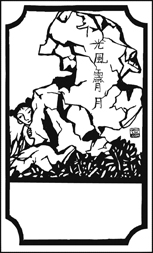
Save 10% on an autographed copy of Grace Lin’s new chapter book. Each copy includes a special edition bookplate designed only for ChinaSprout!


Share/Save/Bookmark

Saturday, June 20, 2009

How ChinaSprout Got Its Start and Blossomed

ChinaSprout launched officially on June 19, 1999. The story of our origins are humble. It began as nothing more than conversations between mothers on a playground — with many mothers asking me for advice about how to teach their children about Chinese culture and me looking for a way to fill their void.

A few weeks before our launch, I was told about the FCC of Greater New York’s annual “Chinese Culture Day”. I had been preparing to launch the ChinaSprout website and thought that this event would be a good opportunity to to promote the company. We rushed to prepare the website to go live and then, armed with fliers, books, crafts, and Chinese dresses for girls, I headed to Chinese Culture Day on June 19.

I will never forget that beautiful, sunny day in Terrytown, New York. Although I had prepared for the event, I was completely surprised at the outcome. There were so many families with Chinese girls. Even though I had met some adoptive families in my neighborhood, I had not expected to see so many adoptive families at this event. There were quite a few Chinese product vendors, as well. However, ChinaSprout was the only vendor with a diverse display of books, dresses, and crafts. People were very excited to see these products and were even happier to find that we offered a greater selection on-line. Some of these families helped to spread the word about ChinaSprout by posting messages about us on Internet list serves. Their generous word-of-mouth helped to launch ChinaSprout and to this day, word-of-mouth contributes greatly to our growth.

A few days after June 19, 1999, ChinaSprout began accepting on-line orders. Ten years have passed and I could not have imagined on that evening, when I packed up from Chinese Culture Days, that ChinaSprout would be where it is today. We have grown from attending our first small, local event to achieving international sales. We are now selling products not only to families with children from China, but also to anyone who with an interest in Chinese culture. We have grown to serve schools across the United States that teach Chinese as a foreign language. Although I had been promoting Chinese language products to public schools since early 2000, I never expected that Chinese would become such a popular subject. It is now the second post popular foreign language among public and private K-12 schools.

As ChinaSprout has grown, we have continued to expand our customer reach from selling products on-line to incorporating traditional channels with our print catalogs and promotions and appearing at nationwide events and conferences all year round. Our products are not only imported from China, as I did in the first two years, but we now carry products from Taiwan, Hong Kong, Singapore, and the U.S. More importantly, we also produce and manufacture our own products. Today, I can proudly say that ChinaSprout provides the largest and best collection of Chinese culture and educational products on the Internet. Of course, this would not have been possible without your involvement and continuous support. I want to take this opportunity to thank you all for all your feedback, suggestions, and business.

To celebrate our 10th anniversary, we will be offering many exciting programs and promotions over the coming year. It is our way of saying “thank you” and celebrating what we have done together. We can’t wait to see what the next 10 years bring!


Share/Save/Bookmark